A Roadmap for Starting a New Role as an IT Leader
You were hired to lead. But before you can lead, you have to understand

what you have inherited — the people, the systems, the debts, and the possibilities.

The first 90 days are not about proving you are smart. They are about proving you are trustworthy.
Every IT leader has a version of this story. You walk into a new organization, and within the first week you discover that the infrastructure documentation is three years out of date, the asset inventory is a spreadsheet with 70% accuracy, the team is talented but stretched thin and reactive, and the relationship between IT and the business ranges from tolerated to actively strained. The previous leader either left quietly, was let go, or was promoted away from a situation that had outgrown them.
You were hired to fix this. Or to build on it. Or to transform it entirely. But before any of that can happen, you have to answer a more fundamental question: what exactly did you inherit?
The first 90 days in a new IT leadership role are not about demonstrating your technical prowess or launching ambitious initiatives. They are about building the understanding, the relationships, and the credibility that will make everything else possible. Get this wrong — move too fast, diagnose too early, prescribe before you listen — and you will spend the next year undoing damage that did not need to happen.
The 30/60/90 Framework
The most effective approach is a phased roadmap that respects the natural rhythm of organizational learning. Each phase builds on the previous one, and the sequence matters as much as the content.
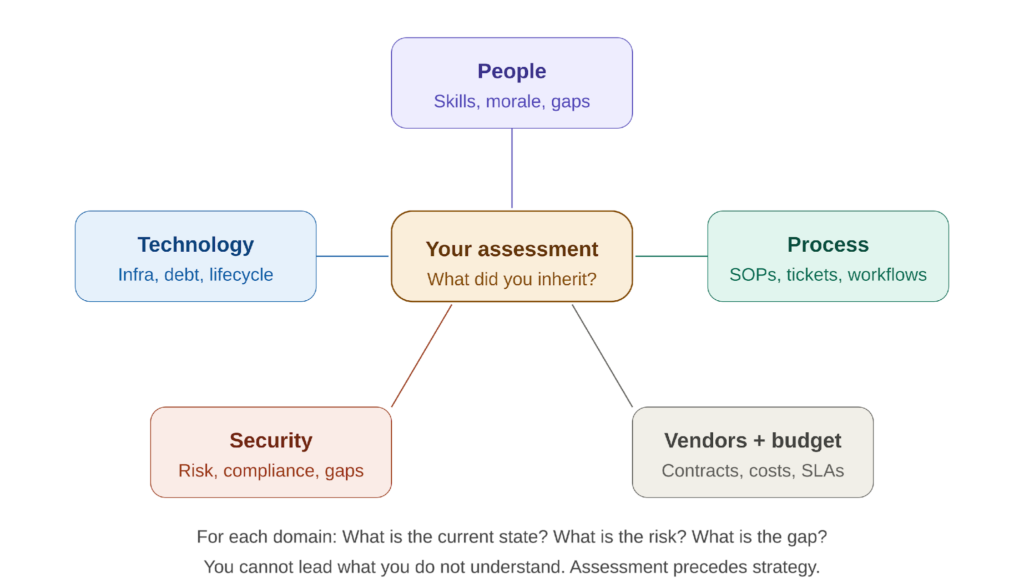
Figure 1: A phased approach — listen and map, diagnose and prioritize, build and communicate.
The first 30 days are about listening, mapping, and building relationships. The next 30 are about diagnosing problems, establishing priorities, and delivering quick wins. The final 30 are about presenting your strategic roadmap and positioning IT as a business partner.
The temptation to skip Phase 1 and jump straight to solutions is almost irresistible. Resist it. Every premature solution you implement before understanding the full context will cost you trust, and trust is the only currency that matters in the first 90 days.
Phase 1: Listen and Map (Days 1–30)
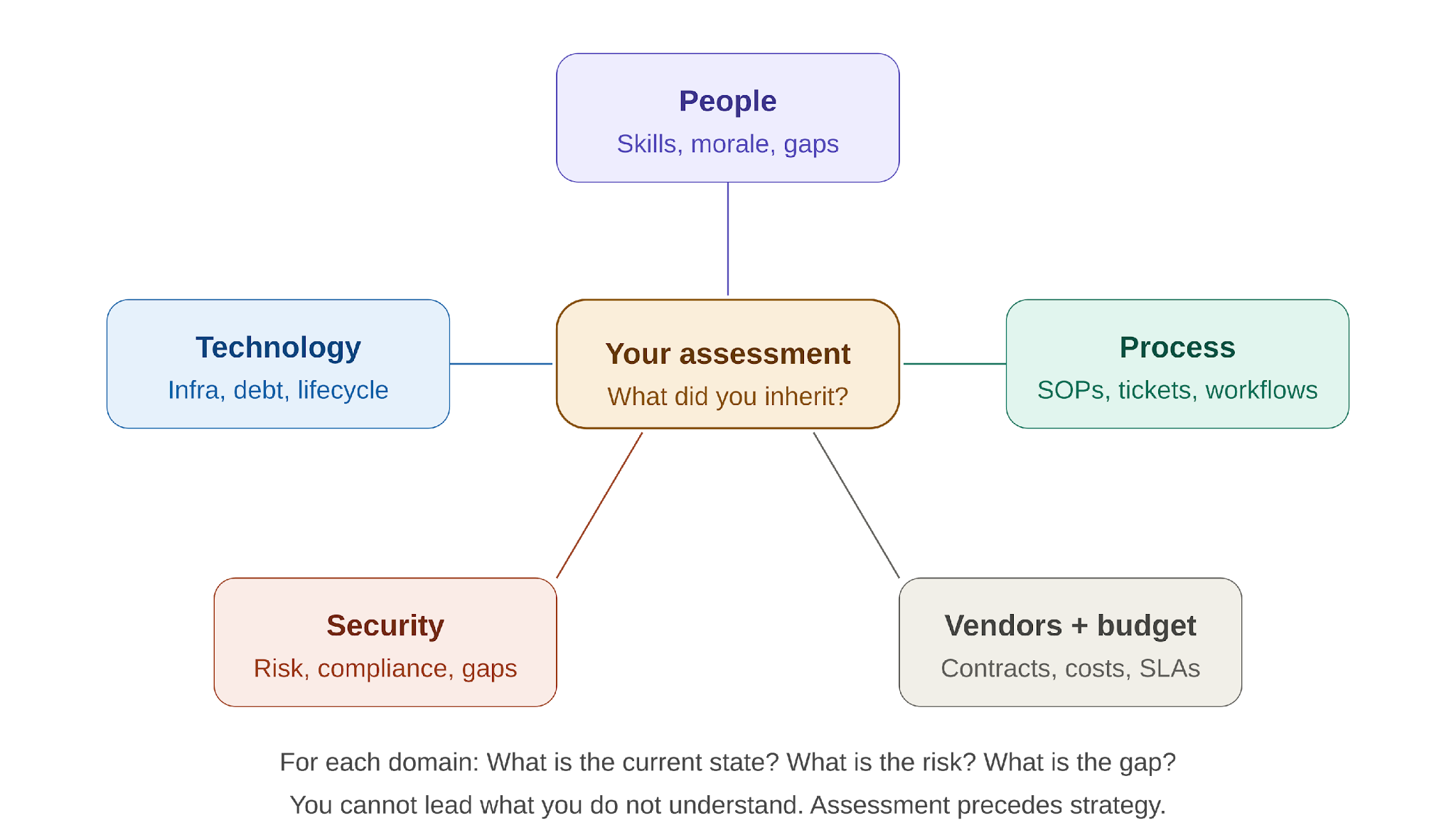
Your first month has one purpose: build a comprehensive, honest picture of the current state. This means conducting a systematic assessment across five domains.
Figure 2: Five domains to assess — People, Technology, Process, Security, and Vendors/Budget.
People. Meet every member of your team individually. Ask what is working, what is not, what they wish leadership understood, and what they would change. Listen for patterns. Listen for the names that keep coming up as load-bearing individuals. Understand the support ratio and whether the team is structured to scale or merely to survive.
Technology. Audit the infrastructure. Map it. What is the age of your fleet? What percentage of equipment is at end of life? What is the state of your MDM enrollment? Are your backups tested or assumed? You cannot make investment decisions without knowing the technical debt you carry.
Process. How do tickets flow? Is there a documented triage process, or does resolution depend on who picks up the ticket? Map the actual workflows, not the theoretical ones. The gap between how people think work gets done and how it actually gets done is where most operational problems live.
Security. Identify and categorize your cybersecurity risk posture. Understand compliance requirements, your vulnerability landscape, incident response readiness, and whether anyone has done a penetration test in the last year.
Vendors and budget. Review every contract. Understand your renewal calendar, spend by category, and negotiating leverage. This is where early quick wins often hide: renegotiating contracts, consolidating licenses, or discovering services you are paying for but not using.
Reading the Culture
There is a sixth domain that does not appear on any technical assessment checklist but may be the most important of all: organizational culture. Culture determines how your initiatives will be received, how change is processed, and whether your leadership will be experienced as an asset or a threat.
Culture operates on three levels, often visualized as a pyramid. Most new leaders only read the top layer and miss the forces that actually drive behavior.
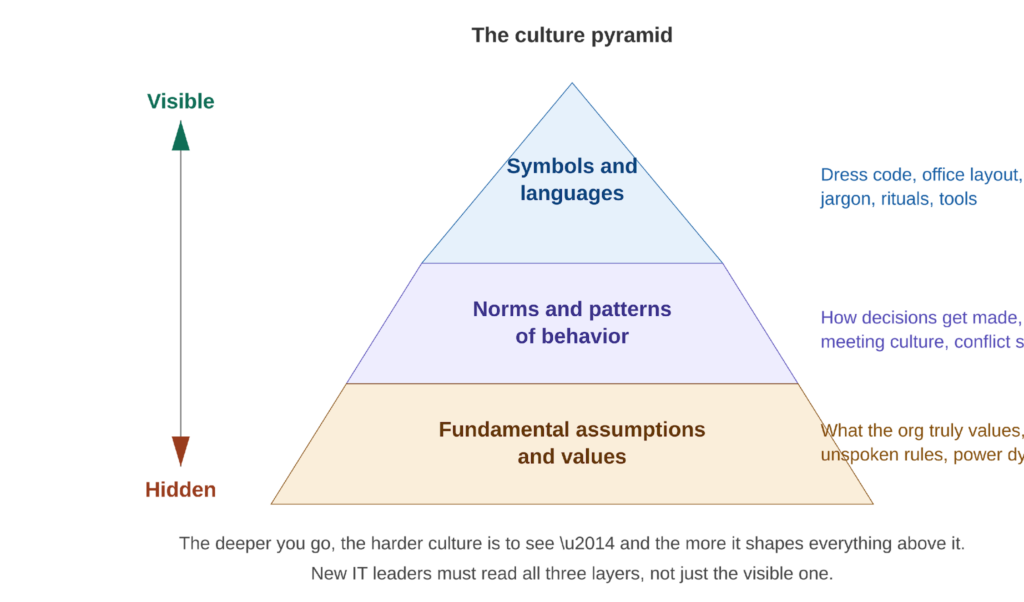
Figure 3: The culture pyramid — from visible symbols to hidden assumptions that shape everything.
Symbols and languages sit at the top — the visible layer. This includes how the office looks, what tools people use, the jargon they speak, the dress code, and the rituals they follow. These are easy to observe and often the first things a new leader notices.
Norms and patterns of behavior sit in the middle. This is how decisions actually get made, how conflict is handled, how meetings run, who speaks and who stays silent, and what gets rewarded versus what gets punished. This layer requires more time to observe and more trust to access.
Fundamental assumptions and values sit at the base — largely hidden. These are the unspoken beliefs about what the organization truly values, how power works, whether failure is punished or learned from, and what “good work” really means beyond the official story. This is the layer that determines whether your change initiatives will take root or be quietly rejected.
As a new IT leader, you must read all three layers. The visible layer tells you what the organization looks like. The middle layer tells you how it operates. The bottom layer tells you what it is. Schedule conversations with your boss and HR specifically about culture within your first two weeks. Identify people inside the organization who can serve as culture interpreters — individuals who understand the unwritten rules and can help you navigate them. After thirty days, conduct an informal 360-degree check-in with your boss and peers to gauge how your cultural adaptation is proceeding.
Culture also determines your change velocity. If the organization is inherently risk-averse, a radical transformation will meet resistance regardless of how technically sound it is. If the organization embraces change and moves fast, a cautious, incremental approach may be perceived as indecisiveness. Your technology roadmap must reflect the cultural context, not just the technical reality.
Phase 2: Diagnose and Prioritize (Days 31–60)
With the assessment complete, you now have the information to make decisions. Phase 2 is about converting understanding into priorities.
Use a value framework that connects every proposed investment to one of three strategic drivers: risk mitigation, cost optimization, and scale enablement. Every initiative should be defensible through at least one of these lenses.
This is also when you deliver your first quick wins. Renegotiating a vendor contract and saving 37% on hardware. Cutting telephony costs by 80%. Moving from 70% to 98% asset inventory accuracy. These wins are small in the context of a multi-year roadmap, but enormous in the context of earning trust.
Establish baseline metrics: ticket volume, resolution time, time to provision, security incident response time, IT cost per employee. These numbers tell the story of your department’s operational health and give you a benchmark for progress.
Phase 3: Build and Communicate (Days 61–90)
By day 60, you should have a clear picture of where you are and where the opportunities lie. Phase 3 is where you translate understanding into a strategic plan and present it to leadership.
The plan should include a 12-to-18-month roadmap organized around your strategic pillars, with projected costs, expected outcomes, and a clear connection between every IT investment and the business objectives it supports. Present it in terms leadership can evaluate: risk reduction, cost per employee, time savings, and scale readiness.
This is also when you address team structure, establish review cadences, build dashboards, and document SOPs. The goal is to move from a reactive, personality-dependent operation to a proactive, system-dependent one.
The Eight Steps of Organizational Transformation
The 30/60/90 framework gives you the structure for your first three months. But if you are stepping into a role where genuine transformation is required — not just optimization but a fundamental shift in how IT operates — you need a longer-arc framework for how change actually happens in organizations.
John Kotter’s eight-step model, developed through decades of studying organizational change, maps directly onto the IT leader’s journey. Each step builds on the previous one, and skipping steps almost always leads to failure.
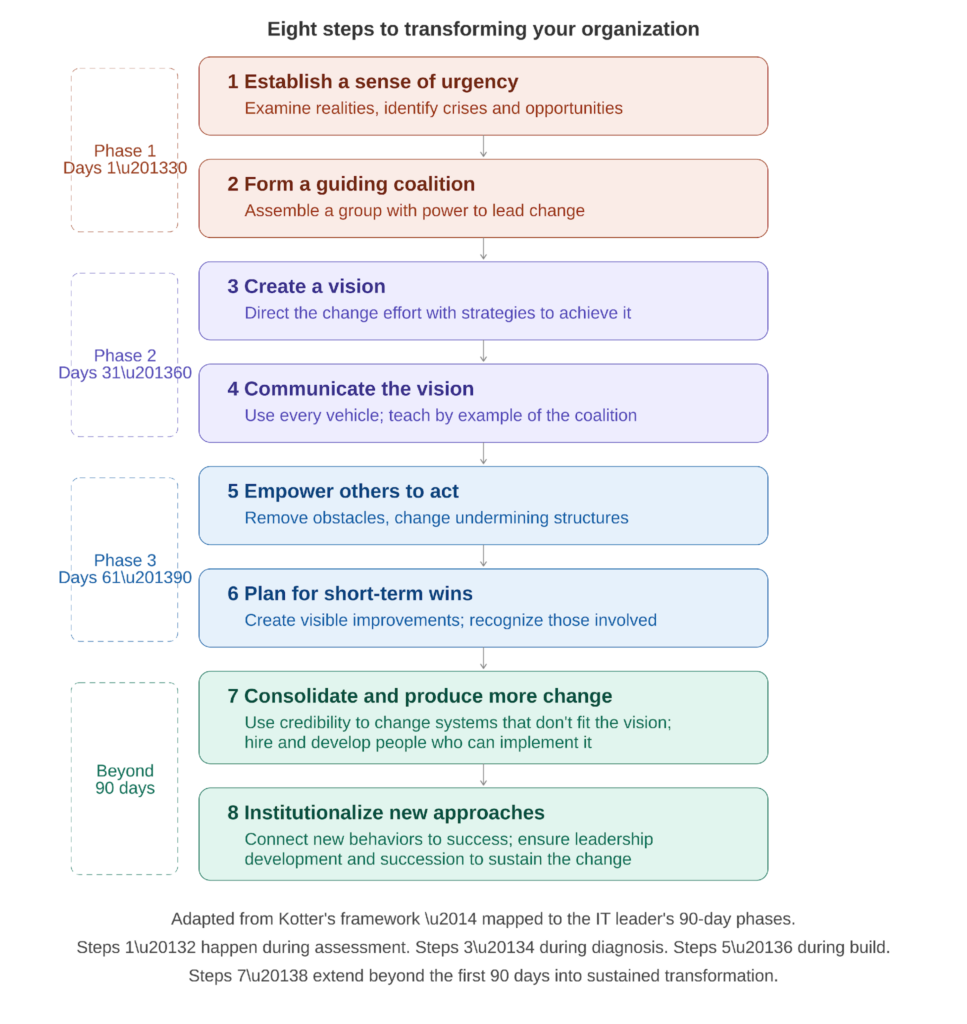
Figure 4: Kotter’s eight steps for organizational transformation, mapped to the IT leader’s phased timeline.
Steps 1–2: Establishing urgency and forming a coalition happen during your Phase 1 assessment. The data you gather — the aging fleet, the security gaps, the reactive patterns — creates the urgency. The relationships you build with stakeholders, team leads, and cross-functional partners form your coalition. Without both, nothing moves.
Steps 3–4: Creating and communicating the vision align with your Phase 2 diagnosis. This is where you articulate not just what needs to change, but why it matters. A vision that says “we need to refresh our laptops” is a project. A vision that says “we are building the foundation beneath the form — the invisible infrastructure that enables every person in this company to do their best work” is a direction. Communicate it through every channel available, and teach the new behaviors by the example of your own leadership.
Steps 5–6: Empowering action and creating short-term wins map to Phase 3. Remove the obstacles that prevent your team from executing. Change the systems and structures that undermine the vision. And plan deliberately for visible, short-term wins — not as a political exercise, but as evidence that the new direction is working. Recognize and reward the people involved in those wins.
Steps 7–8: Consolidating change and institutionalizing new approaches extend beyond the first 90 days into sustained leadership. Use the credibility you have earned to change the systems, policies, and structures that still do not fit the vision. Hire, promote, and develop people who can carry the vision forward. And — critically — connect the new behaviors to organizational success so they outlast your personal involvement. Build succession. Build sustainability. Build the institution, not just the initiative.
The Worse-Before-Better Reality
There is an uncomfortable truth about stepping into a new leadership role: you will feel less competent, not more, during the transition.
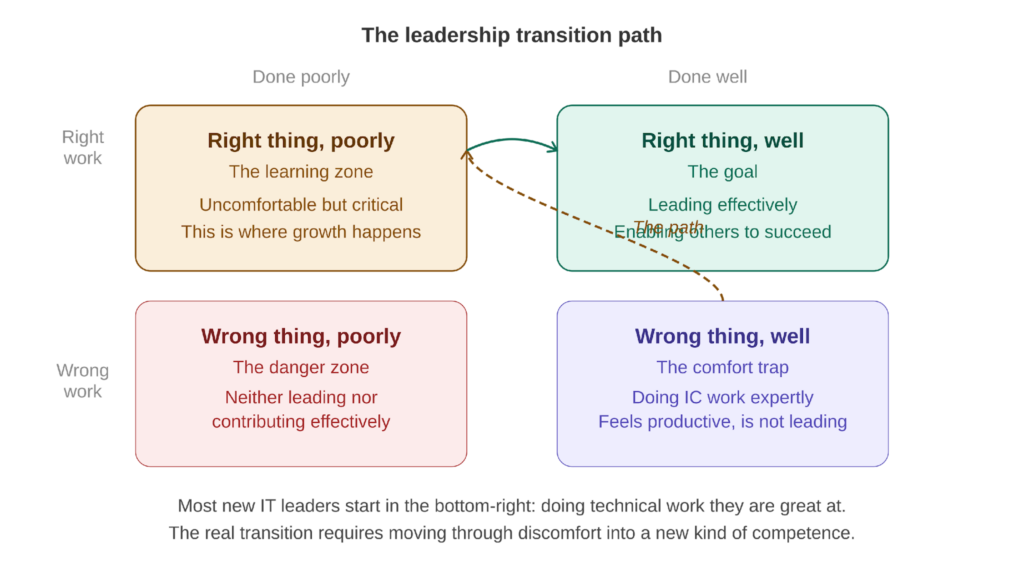
Figure 5: The leadership transition — from comfortable technical work to the discomfort of new work.
Most new IT leaders come from technical backgrounds. They were promoted because they were excellent individual contributors. And when they step into leadership, the instinct is to keep doing that work. It feels productive. It is familiar.
But it is the wrong work. The work of leadership is different: enabling others to succeed, building systems that outlast your involvement, making decisions about priorities. And in the beginning, you will do this new work poorly. This discomfort is the learning zone. The path from doing the wrong thing well to doing the right thing well necessarily passes through doing the right thing poorly.
Two stumbling blocks: the urge to do the work yourself rather than developing others to do it, and the urge to focus on compliance rather than commitment.
The Five Tools You Have
Direction — a vivid vision of where you are headed and why it matters.
Relationships — connections that open lines of exchange, remove obstacles, and gather resources.
Design — the systems, structures, and practices you establish for your team.
Process — how people interact to get work done: meetings, information sharing, feedback.
Self — your presence, communication style, and willingness to listen before prescribing.
Building the Foundation
I have described the work of the first 90 days as building the foundation beneath the form — the invisible infrastructure that makes everything above it possible. No one compliments the concrete slab. But without it, nothing stands.
Listen before you lead. Diagnose before you prescribe. Build on evidence, not assumptions. Read the culture before you try to change it. And remember that the first 90 days are not a performance — they are a foundation. What you build in those days will determine what you can build in the years that follow.
Onboarding Checklists
Reference checklists for your first weeks in a new IT leadership role. Use these as a practical companion to the phased roadmap above.
Business orientation checklist
- As early as possible, get access to publicly available information about financials, products, strategy, and brands.
- Identify additional sources of information, such as websites and analyst reports.
- If appropriate for your level, ask the business to assemble a briefing book.
- If possible, schedule familiarization tours of key facilities before the formal start date.
Stakeholder connection checklist
- Ask your boss to identify and introduce you to the key people you should connect with early on.
- If possible, meet with some stakeholders before the formal start.
- Take control of your calendar, and schedule early meetings with key stakeholders.
- Be careful to focus on lateral relationships (peers, others) and not only vertical ones (boss, direct reports).
Expectations alignment checklist
- Understand and engage in business planning and performance management.
- No matter how well you think you understand what you need to do, schedule a conversation with your boss about expectations in your first week.
- Have explicit conversations about working styles with bosses and direct reports as early as possible.
Cultural adaptation checklist
After thirty days, conduct an informal 360-degree check-in with your boss and peers to gauge how adaptation is proceeding.
During recruiting, ask questions about the organization’s culture.
Schedule conversations with your new boss and HR to discuss work culture, and check back with them regularly.
Identify people inside the organization who could serve as culture interpreters.
Leave a Reply